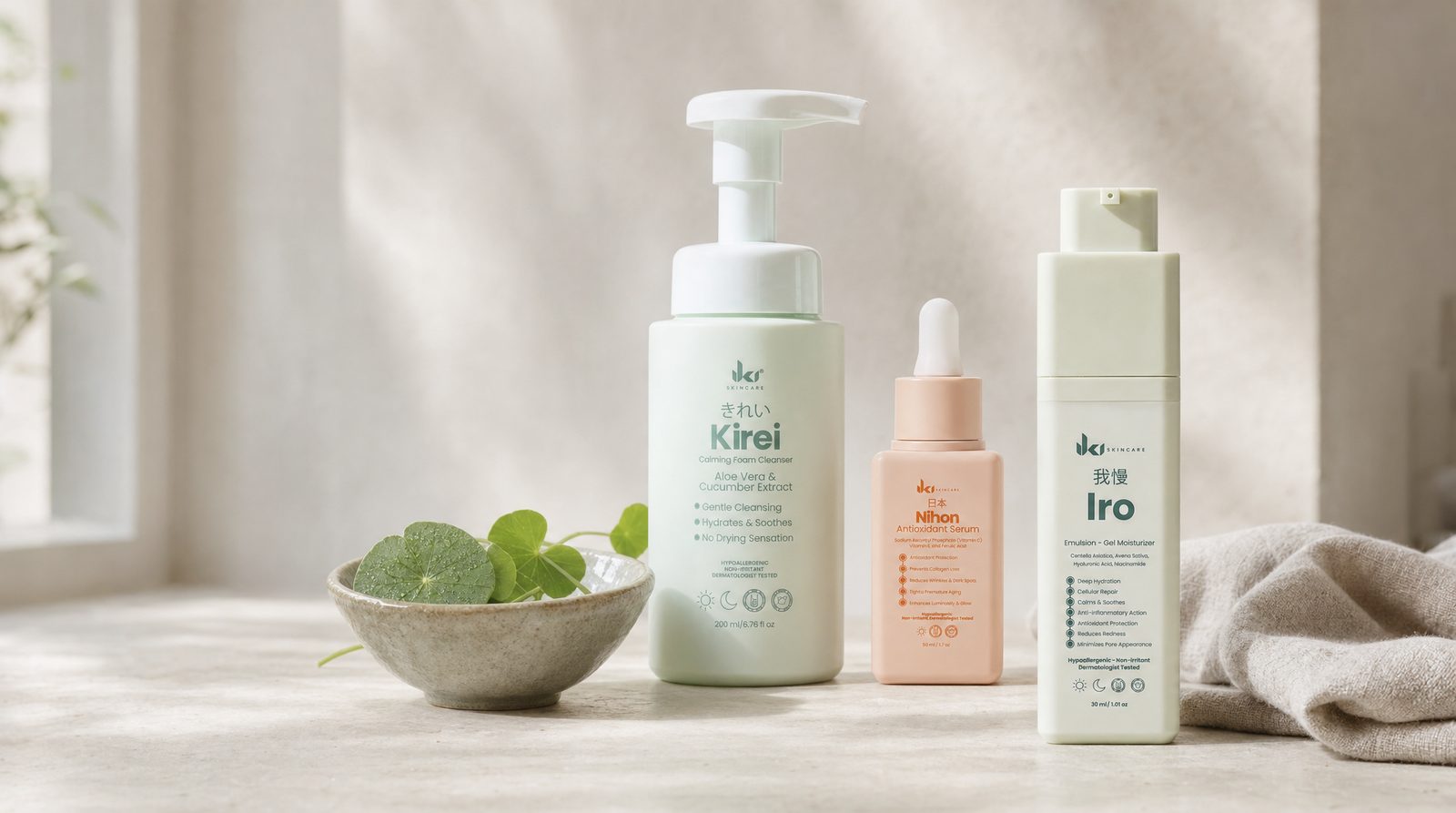
If you have rosacea-prone skin, you probably know the pattern. A new product promises to calm things down, your face stings within a minute, and by evening the flush has spread further than before. Most of the advice online makes it worse by adding steps.
Our founder, Dr. Urbani, is a physician who lives with rosacea, and the routine she uses on her own skin is the opposite: fewer products, gentler formulas, and sunscreen without exception. This guide explains why that works, what to leave out, and a simple three-step routine you can start tomorrow morning.
What rosacea is, and what skincare can and cannot do
Rosacea is a long-term inflammatory skin condition, most often on the cheeks, nose, chin and forehead. It can show up as frequent flushing, persistent redness, visible small blood vessels, bumps and pimples, thickened skin on the nose, or dry, irritated eyes. It is common, it often starts after 30, and it tends to come and go in flares.
Skin with rosacea also tends to have a weaker barrier: it loses water more easily and reacts to ingredients that other skin tolerates. That is where skincare helps. A gentle routine keeps the barrier steady, avoids triggering flares and makes the skin more comfortable.
What skincare cannot do is treat rosacea itself. Doctors use prescription treatments for that, such as azelaic acid, metronidazole or ivermectin creams, oral medication for bumps, and laser or light treatments for visible vessels. If your redness is persistent, if you have bumps, or if your eyes are affected, see a doctor. A good routine works alongside that plan, not instead of it.
What is the best skincare routine for rosacea?
Three steps in the morning, two at night. Nothing else until your skin has been calm for a few weeks.
Morning
- Cleanse gently, or just rinse. Many people with rosacea do best with lukewarm water alone in the morning. If you prefer a cleanser, choose a sulfate-free, pH-balanced foam and rinse without rubbing.
- Calm and moisturize. A light moisturizer with calming ingredients, applied to slightly damp skin.
- Mineral sunscreen, SPF 30 or higher. Sun is one of the most commonly reported rosacea triggers, and zinc oxide or titanium dioxide filters are usually better tolerated than chemical ones.
Night
- Cleanse to remove sunscreen, with the same gentle cleanser and lukewarm water.
- Moisturize. The same moisturizer, or your doctor's prescription cream followed by moisturizer if they advise it.
Pat your face dry with a soft towel. Apply everything with light pressing movements, not rubbing. Friction alone can bring on a flush.
Ingredients that tend to suit rosacea-prone skin
- Centella asiatica (cica): soothing and supports barrier repair.
- Niacinamide: strengthens the barrier and helps the skin hold water. Moderate levels are usually best tolerated; very high strengths can sting.
- Colloidal oatmeal: one of the best-documented ingredients for calming itchy, irritated skin.
- Hyaluronic acid, glycerin and squalane: hydration without heaviness.
- Azelaic acid: one of the few actives with good evidence in rosacea, at prescription strength. Ask your doctor before using it.
Our guide to ingredients that calm sensitive skin goes into each one in more detail.
What should you not put on your face with rosacea?
- Physical scrubs, brushes and cleansing devices. Friction is a direct trigger.
- Strong exfoliating acids such as high-strength glycolic acid peels. They thin a barrier that is already struggling.
- Alcohol-heavy toners and astringents, including witch hazel toners with denatured alcohol.
- Menthol, camphor, peppermint and eucalyptus, the "tingling" ingredients. The tingle is irritation.
- Fragrance and essential oils. Common causes of stinging and contact irritation. If you know you react to a specific oil, such as citrus, check every ingredient list.
- Sodium lauryl sulfate and other harsh foaming agents.
- Retinoids and pure L-ascorbic acid vitamin C while your skin is flaring. Some people tolerate them later, introduced slowly; others never do.
When in doubt, patch test a new product on the side of your neck or inner forearm for a few days before using it on your face, and add only one new product at a time.
What is the biggest trigger for rosacea?
Triggers vary from person to person, but in patient surveys sun exposure is the most commonly reported, followed by emotional stress and hot weather. Other frequent triggers are wind, intense exercise, alcohol (especially red wine), hot drinks, spicy food, hot baths and saunas, and some skincare and makeup products.
A simple trigger diary for two or three weeks, noting what you ate, did and applied on days when you flushed, is often more useful than any product. Most people find two or three triggers that matter for them, and many that do not.
What calms a rosacea flare quickly?
There is no instant fix, but you can shorten a flare and avoid making it worse:
- Cool down. Move out of the heat or sun, sip something cold, and hold a cool (not ice-cold) damp cloth to the area for a few minutes.
- Strip the routine back. Stop every active. Use only lukewarm water, a calming moisturizer and sunscreen until the flare settles.
- Do not touch, scrub or cover heavily. If you wear makeup, keep it light and mineral-based, and remove it gently.
- Call your doctor if a flare comes with burning eyes, swelling, pain or pustules, or if it does not settle within a week or two. Prescription options for redness and bumps work faster than any skincare.
Does rosacea redness ever go away?
Rosacea is a long-term condition, but it is very manageable. Flushing and flares often become less frequent once triggers are known, the barrier is supported and a medical treatment is in place. Persistent background redness and visible vessels tend to need in-office treatments such as laser or intense pulsed light. Skincare will not erase them, and any product that promises it is overselling.
What a gentle routine does well is make skin feel calmer and more comfortable, and stop your skincare from being one of the triggers.
Can you use vitamin C with rosacea?
Carefully, and not during a flare. Pure L-ascorbic acid needs a very low pH and often stings rosacea-prone skin. Sodium ascorbyl phosphate is a gentler, near-neutral form of vitamin C. Once your skin has been calm for two weeks, it is the form to try first, as an optional antioxidant step in the morning before moisturizer. Our guide to vitamin C for sensitive skin explains the difference.
The IKI routine for rosacea-prone skin
Dr. Urbani formulated IKI for her own rosacea-prone skin, and our Everyday Morning Routine follows the approach in this guide:
- Kirei Calming Foam Cleanser: sulfate-free and pH-balanced, with aloe vera and cucumber extract. In an independent 30-day study with 48 people with sensitive skin, 92% said it did not cause irritation, and a dermatologist-supervised 48-hour patch test on 27 participants showed no reaction.
- Nihon Antioxidant Serum (optional, once skin is calm): sodium ascorbyl phosphate with vitamin E and ferulic acid, fragrance-free.
- Iro Emulsion Gel Moisturizer: Centella asiatica, colloidal oatmeal, niacinamide and several forms of hyaluronic acid in a light gel. In its 30-day study with 49 people with sensitive skin, 100% said it feels gentle, 96% said their skin feels more hydrated and 90% said their skin feels calmed and soothed.
Both studies reported no adverse events; every question and answer is on our study results page. Kirei and Iro have no added fragrance, but each contains a small amount of lemon oil for a light natural scent, so if you know you react to citrus oils, patch test first. Finish with your mineral sunscreen.
For more on redness specifically, see our page on skincare for redness and rosacea-prone skin, and if your barrier is already damaged, start with how to repair a damaged skin barrier.
The bottom line
Rosacea-prone skin rarely needs more products. It needs fewer, gentler ones, used consistently: a mild cleanser, a calming moisturizer, sunscreen every morning, and the patience to change one thing at a time. Pair that with a doctor's treatment plan when you need one, learn your own triggers, and your skincare stops being part of the problem.