Why body skin cracks
Hands, heels, elbows and lips have fewer oil glands than the face and take more abuse: washing, friction, cold, dry indoor air. Once the surface lipids are gone, water escapes, the skin stiffens and cracks, and cracks let irritants in. Repair needs two things: an emollient that penetrates and an occlusive that keeps water in.
What is in Gaman, and why so little
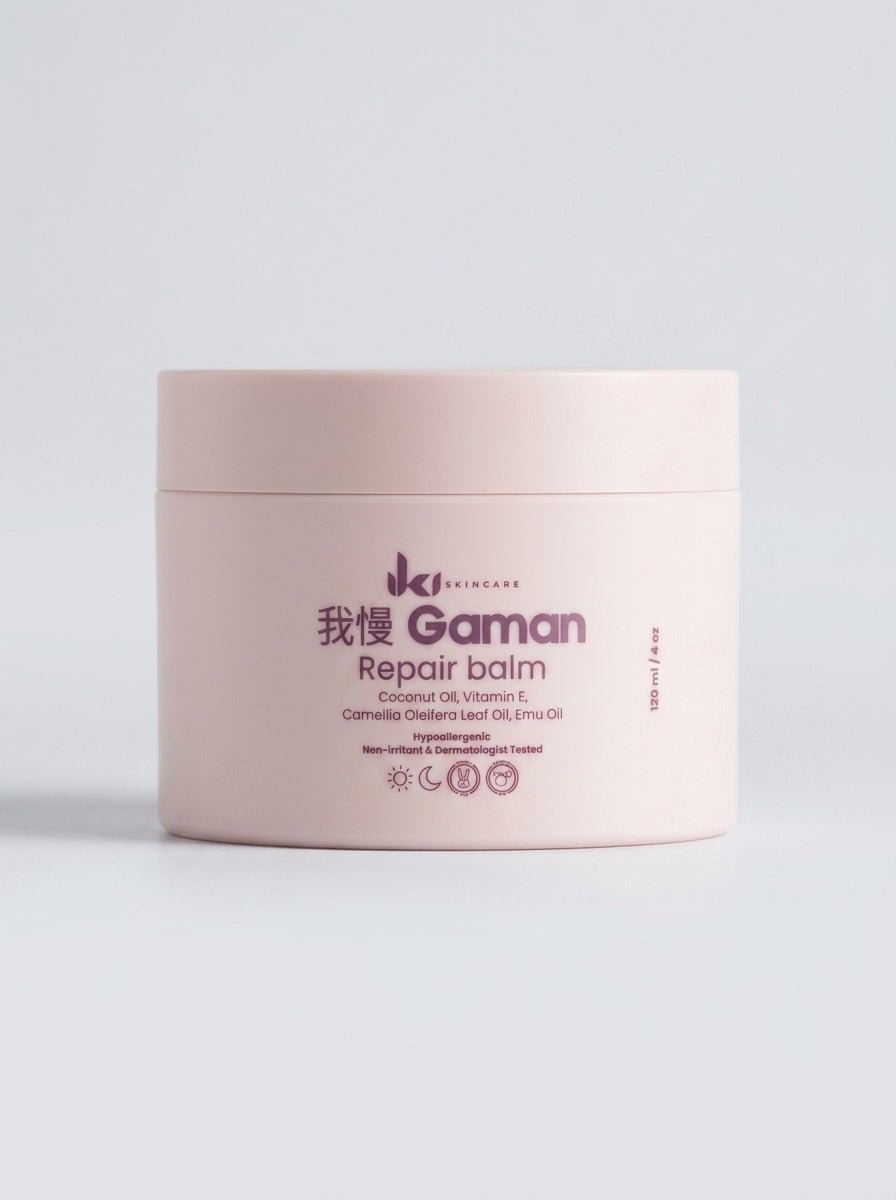
Seven ingredients: emu oil (penetrating emollient with a fatty-acid profile close to skin's own), coconut oil (nourishing, antimicrobial), beeswax (occlusive seal), vitamin E (antioxidant) and lavender, manuka and sweet orange oils for a natural scent. No water means no preservatives and no emulsifiers, which is why it suits skin that reacts to almost everything else. It is not vegan; we say so plainly.
Where people use it
Hands after washing, heels at night under socks, elbows and knees, cuticles, lips, dry patches on shins, and areas that stretch during pregnancy. Gaman is listed as pregnancy-safe. In its 30-day study, 91% of participants said the balm was easy to apply and 93% said dry areas felt soothed and hydrated.
A note on eczema
Many people with eczema-prone skin use balms like Gaman between flares, and the study included participants who reported eczema-like symptoms. Gaman is a cosmetic balm, not a treatment: for active eczema follow your dermatologist's plan and use the balm as the maintenance step they recommend.