Why dark spots form
Melanin is made by the enzyme tyrosinase in response to UV, inflammation (a blemish, a scratch, a rash) or hormones (melasma). A dark spot is simply a cluster of pigment that stayed behind. Fading it means slowing new pigment and speeding up the shedding of old, while protecting from the sun that started it.
The four mechanisms, and which ingredient does each
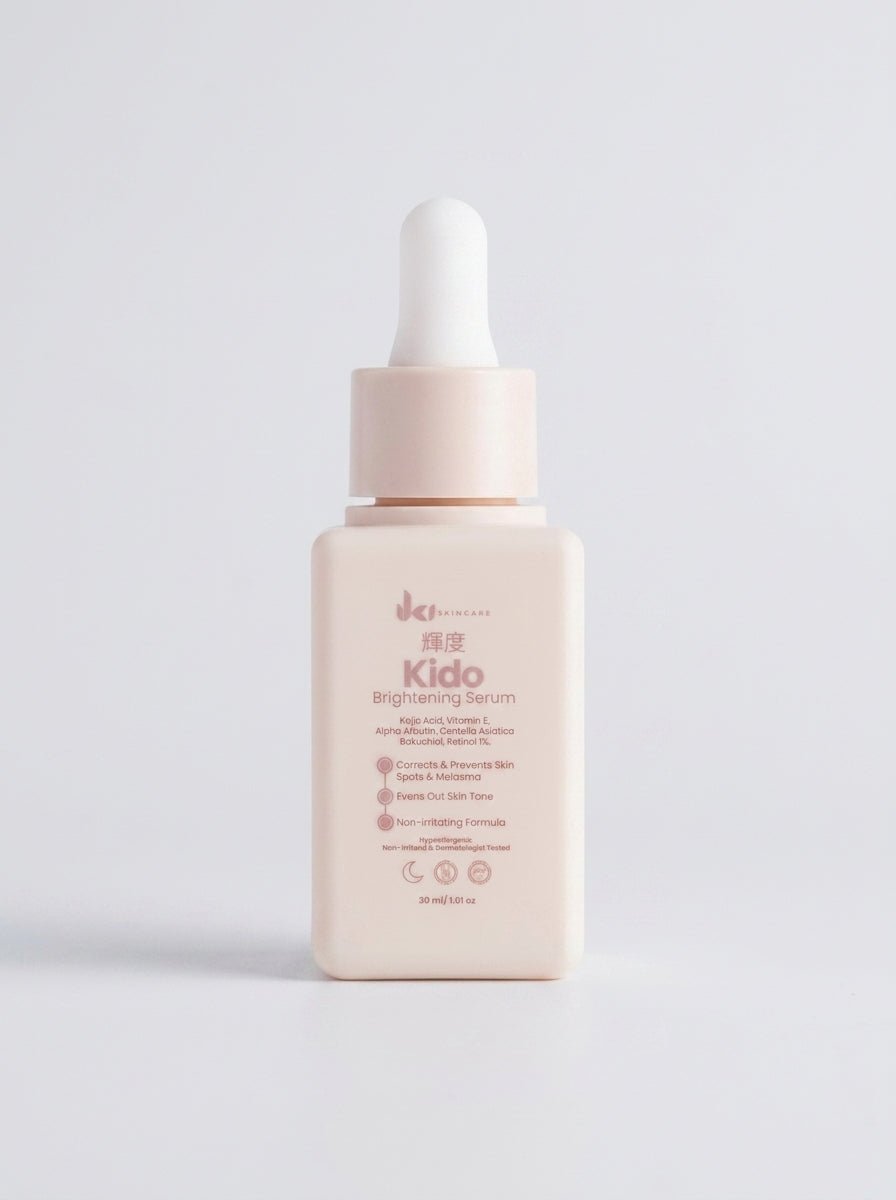
- Inhibit tyrosinase: alpha arbutin and kojic acid.
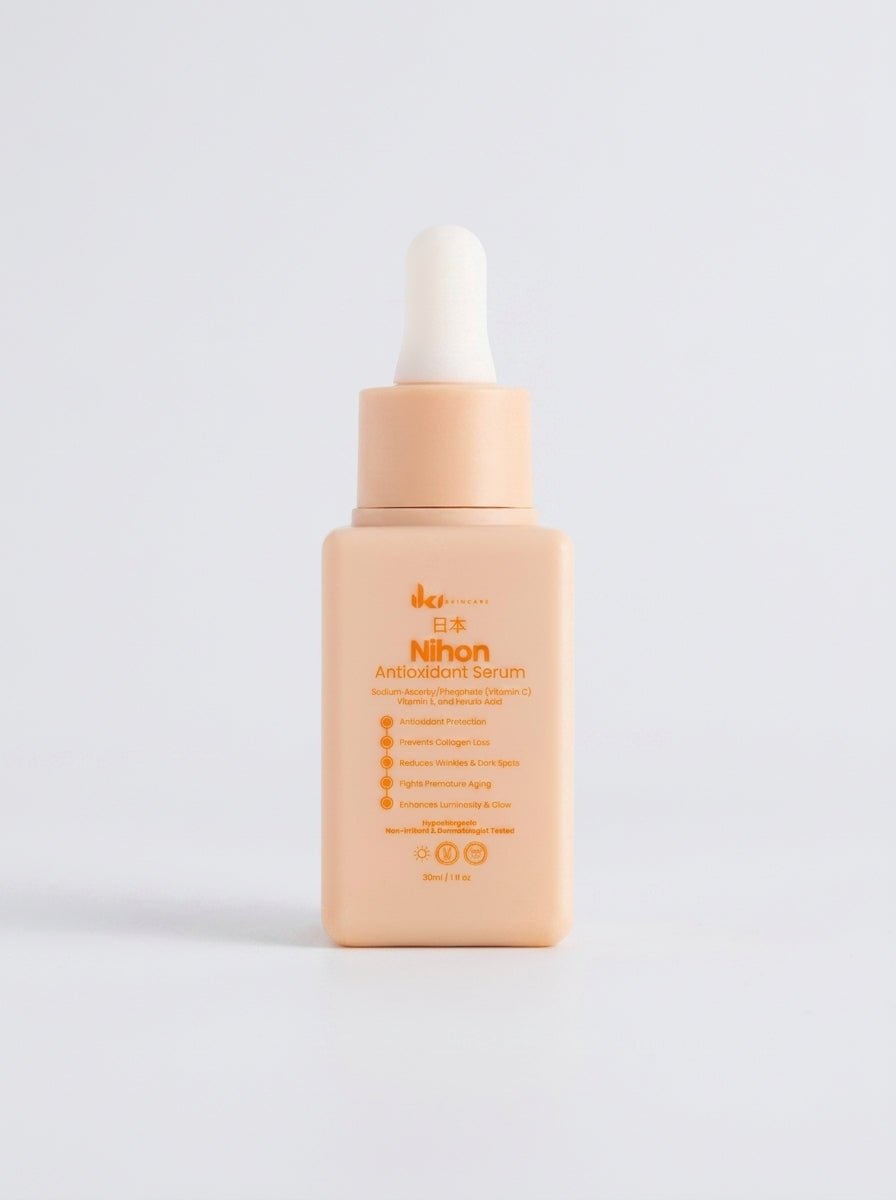
- Reduce existing pigment and oxidative damage: vitamin C with vitamin E and ferulic acid.
- Speed up renewal: bakuchiol and a low level of retinol.
- Prevent new spots: sunscreen, every morning, reapplied outdoors.
A realistic timeline
Skin renews in about four weeks; pigment sits deeper and takes two to three cycles to clear. Expect the first visible change at four to six weeks and clearer results at eight to twelve. Photograph your skin in the same light every two weeks; the change is gradual enough to miss day to day.
Sensitive skin and brightening
Irritation is the enemy of brightening because inflammation triggers more pigment. That is why Kido uses the ester form of kojic acid, buffers retinol with bakuchiol and includes Centella. If you are new to retinol, start Kido three nights a week. Kido contains retinol and is not recommended during pregnancy or breastfeeding.